
Understanding the Role of Government
At Our American Party, we believe government is the structure that creates laws, ensures public services, and protects citizen rights. It should represent all the people and serve as the foundation for accountability, order, and civic participation across the United States.
Click on the images below to see what your favorite historical figure said about the role of government.
What is Government For?
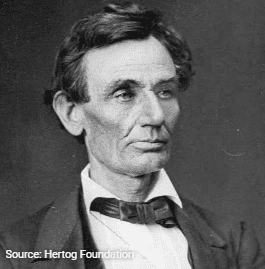
Abraham Lincoln
What They Can Not Do for Themselves
Abraham Lincoln believed that the job of the government was to do what a community of people could not do for themselves.
"The legitimate object of government, is to do for a community of people, what ever they need to have done, but can not do, at all, or can not, so well do, for themselves—in their separate, and individual capacities."
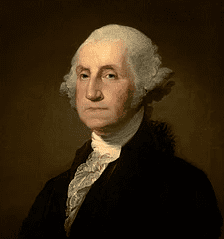
George Washington
Protect the Freedoms and Liberties of its Citizens
Washington stood for national freedom, individual liberties, and a strong central government that would serve to protect the freedoms and liberties of its citizens.
Although Washington stood for a powerful central government, he did not believe that a single man in the United States government should have an excess of power. Therefore, he refused to run for a third term as President, setting a precedent for the future Presidents of the United States.
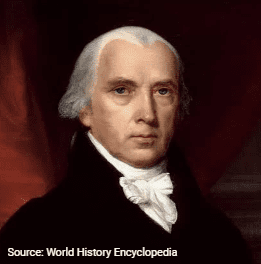
James Madison
Control Conflicting Interest Groups
Often called the "Father of the Constitution," Madison viewed government as a necessary but dangerous tool. He believed its primary purpose was to control the "factions" (conflicting interest groups) that naturally arise in society.
"If men were angels, no government would be necessary. If angels were to govern men, neither external nor internal controls on government would be necessary."
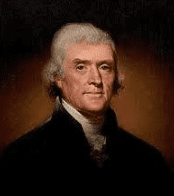
Thomas Jefferson
Limit Powers to Acts Injurious to Others
Jefferson believed that "the legitimate powers of government extend to such acts only as are injurious to others.”
"It does me no injury for my neighbor to say there are twenty gods, or no god. It neither picks my pocket nor breaks my leg."
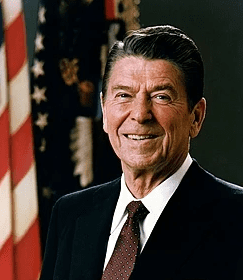
Ronald Reagan
Protect the Nation and Ensure the Rule of Law
Reagan famously viewed government not as the solution to problems, but as the primary obstacle to individual prosperity. He believed government's role should be strictly limited to protecting the nation and ensuring the rule of law, while otherwise getting out of the way of the people.
"Government's first duty is to protect the people, not run their lives."
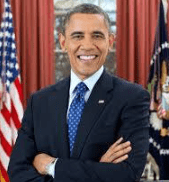
Barak Obama
Keep Us Safe, Educate our Kids, Provide a Safety Net
Obama viewed government as a collective instrument to expand opportunity and provide a "safety net" that allows individuals to take risks. He believed government should do for the people what they cannot do better for themselves—specifically in areas like healthcare, education, and infrastructure.
"Government is us. We, the people, recognize that our country cannot succeed when a shrinking few do very well and a growing many barely make it."
"We don’t believe that government can solve all our problems. But we do expect it to do some things—to keep us safe, to educate our kids, to provide a basic sense of security." — Barack Obama, 2012
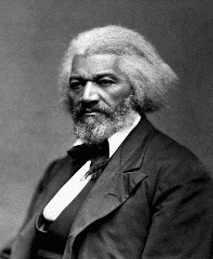
Fredrick Douglass
Protection of Natural Rights
For Douglass, the purpose of government was the uncompromising protection of natural rights—specifically liberty and justice for all, regardless of race. He believed the government's legitimacy rested entirely on its ability to guarantee the freedom of its citizens.
"The government of the United States is a government of the people, by the people, and for the people... but the people must be all the people."
Douglass’ most famous philosophy is that "servants" (the government) will always try to become "masters" unless the people demand otherwise.
"Power concedes nothing without a demand. It never did and it never will."
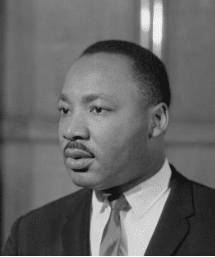
Martin Luther King Jr.
Ensure Social and Economic Justice
Dr. King believed the government had a moral obligation to ensure social and economic justice. To him, government was not just a protector of peace, but a tool to correct systemic "wrongs" and ensure that the "American Dream" was accessible to those who had been historically excluded.
"The law cannot make a man love me, but it can keep him from lynching me, and I think that’s pretty important."
"A nation that continues year after year to spend more money on military defense than on programs of social uplift is approaching spiritual doom."
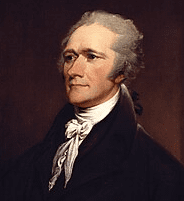
Alexander Hamilton
Just, Limited, Federal Government
Hamilton said, “Real liberty is never found in despotism or the extremes of democracy, but in moderate governments.” “It’s not tyranny we desire; it’s a just, limited, federal government.”
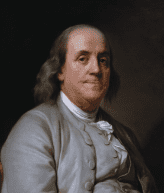
Benjamin Franklin
Political Power Rests Entirely with the Citizens
Franklin said, “In free governments the rulers are the servants, and the people their superiors and sovereigns.”
Elected officials hold temporary power granted by the public. Rulers must answer to the people who elected them. Citizens can remove officials who fail to serve their interests.
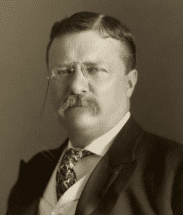
Theodor Roosevelt
Referee between Big Business and the Common Worker
Roosevelt believed in a "Square Deal" where the government acted as an impartial referee between big business and the common worker. He saw the government as a force to protect the public from the "excesses" of powerful special interests and to preserve the nation's natural resources.
"The object of government is the welfare of the people... The citizens of the United States must effectively control the mighty commercial forces which they have themselves called into being."
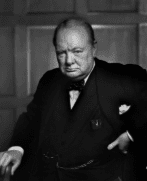
Winston Churchill
Provide a Safety Net and a Ladder
Churchill saw government as the "Great Stabilizer." He believed the state must provide a "safety net" below which no one could fall, but also a "ladder" that everyone should be free to climb.
"If you make ten thousand regulations you destroy all respect for the law."
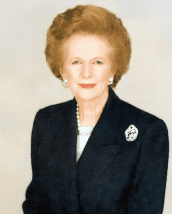
Margaret Thatcher
Provide a Framework of Law
Mirroring Ronald Reagan’s philosophy, Margaret Thatcher believed the government’s role was to provide a framework of law, but that the "community" was actually made up of individuals and families, not a collective state.
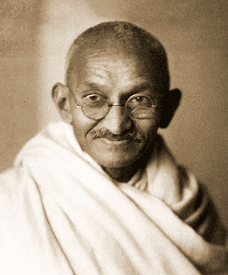
Mahatma Gandhi
Empower the Individual to be Self-Reliant
Gandhi viewed the state as a source of violence and believed the best government was the one that governed the least and empowered the individual to be self-reliant.
"Government that is ideal governs the least. It is no self-government that leaves nothing for the people to do."
"Civil disobedience becomes a sacred duty when the state becomes lawless or corrupt."
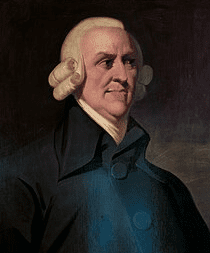
Adam Smith
Protect Every Citizen and Maintain Public Works
The father of modern economics, Smith believed government should be a "Passive Umpire." He argued it has only three legitimate functions:
- Protecting society from violence and invasion (Military).
- Protecting every citizen from injustice or oppression by others (Legal System).
- Maintaining public works (roads, bridges) that are too expensive for individuals to build.
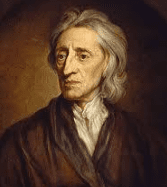
John Locke
Protect Life, Liberty, and Property
Known as the "Philosopher of the American Revolution," Locke’s ideas directly inspired Jefferson. He believed government's only purpose was the protection of "Life, Liberty, and Property."
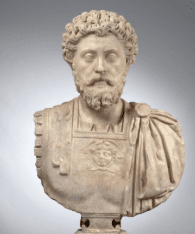
Marcus Aurelius
Maintain Reason and Order
Marcus Aurelius believed the ruler must act for the benefit of the "world-city."
Leadership is a burden of service, not a privilege.
The government's role is to maintain Logos (reason and order) in alignment with nature.
"What is not good for the beehive, cannot be good for the bee."
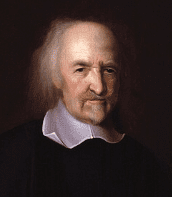
Thomas Hobbes
Provide Absolute Security
Hobbes believed that government’s only job is to provide absolute security. We trade almost all our freedoms to a strong leader in exchange for not being murdered by our neighbors.
"Covenants, without the sword, are but words."
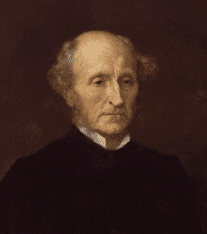
John Stuart Mill
The Individual is Sovereign
Mill argued that the only purpose for which power can be rightfully exercised over any member of a civilized community, against his will, is to prevent harm to others.
"Over himself, over his own body and mind, the individual is sovereign."
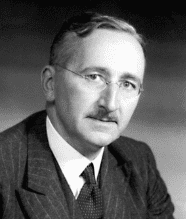
Friedrich Hayek
Government Leads to Tyranny
Hayek argued that even "well-intentioned" government planning inevitably leads to tyranny.
"The more the state 'plans,' the more difficult planning becomes for the individual."
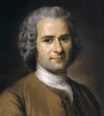
Jean-Jacques Rousseau
The Common Good
Rousseau argued that by joining a society, individuals give up some private interests to pursue the "common good." Government isn't just an umpire; it is the expression of the people's collective moral identity.
"Man is born free, and everywhere he is in chains... Laws are but the acts of the general will."
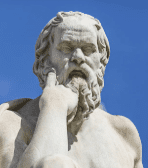
Socrates
Justice, Self-Control, and Piety
Unlike modern democratic ideals, Socrates argued that the purpose of the state is to make its citizens "good" by instilling virtues like justice, self-control, and piety.
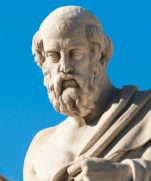
Plato
Order, Harmony, and Truth
To Plato, government is not about individual rights or personal happiness; it is about Order, Harmony, and Truth. He believed rulers should be "Philosopher-Kings"—people who have no desire for wealth or fame, but who lead out of a sense of duty because they alone have glimpsed the "Form of the Good" (Absolute Truth).
Plato famously argued that the greatest tragedy of politics is that those who want power are usually the least fit to hold it.
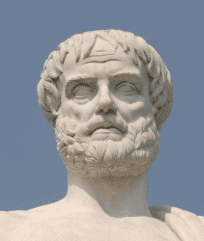
Aristotle
Ensure Happiness and Virtue
Aristotle argued that true security comes from the state fostering virtuous, law-abiding citizens and pursuing the "good life," rather than from military conquest.
"The true forms of government, therefore... govern with a view to the common interest; but governments which rule with a view to the private interest... are perversions."
"*" indicates required fields
1. To Do What the Individual Cannot (The Collective Builder)
Following the logic of Lincoln and Obama, government is a tool for a community to achieve what is impossible for a person alone.
- Infrastructure: As Adam Smith noted, this includes public works like roads and bridges that are too expensive for private individuals but essential for the common good.
- Opportunity: It serves as the "Great Stabilizer" (Churchill) by providing a "safety net" and a "ladder," ensuring the "American Dream" is accessible through education and social uplift (King).
2. To Act as a "Passive Umpire" (The Protector of Rights)
Nearly every figure—from Locke to Jefferson to Thatcher—agreed that government exists to prevent one person from injuring another.
- The Harm Principle: Its legitimate power extends only to acts "injurious to others" (Jefferson). It must protect "Life, Liberty, and Property" (Locke).
- The Referee: It acts as an impartial arbiter in a "Square Deal" (T. Roosevelt), restraining the excesses of powerful factions or "mighty commercial forces" that would otherwise crush the individual.
3. To Restrain Human Nature (The Necessary Evil)
Madison and Hamilton viewed government as a necessary but dangerous machine required because "men are not angels."
- Security: Its first duty is to protect the people from violence and invasion (Reagan and Smith).
- Order: It provides a framework of law to control conflicting interest groups, preventing a descent into chaos or the "extremes of democracy" (Hamilton).
4. To Be the "Servant of the Sovereign" (The Moral Steward)
Finally, Franklin, Douglass, and King remind us that the government is not a master, but a servant.
- Accountability: Because the people are the "superiors and sovereigns" (Franklin), the government's legitimacy rests on its uncompromising protection of "all the people" (Douglass).
- Conscience: It has a moral obligation to ensure "social and economic justice" (King), prioritizing the "Rights of Man" over the mere expansion of military might.
The Final Synthesis
Ultimately, government is a "Glorious Liberty Document" put into practice. It is a necessary structure created by a community to secure the natural rights of its members, moderate their conflicts, and pool their resources to build a society where "Real Liberty" can flourish without turning into "Despotism."
As Washington demonstrated by his retirement, its most vital role is to remain limited, ensuring that no single servant ever becomes a master.
The Grand Conclusion
Government is a necessary burden created by a social contract. Its purpose is to provide the absolute security required for life, the justice required for liberty, and the virtuous framework required for a community to flourish—all while remaining limited enough to ensure the "servants" never become "masters" and the "bee" is never crushed by the "beehive."